
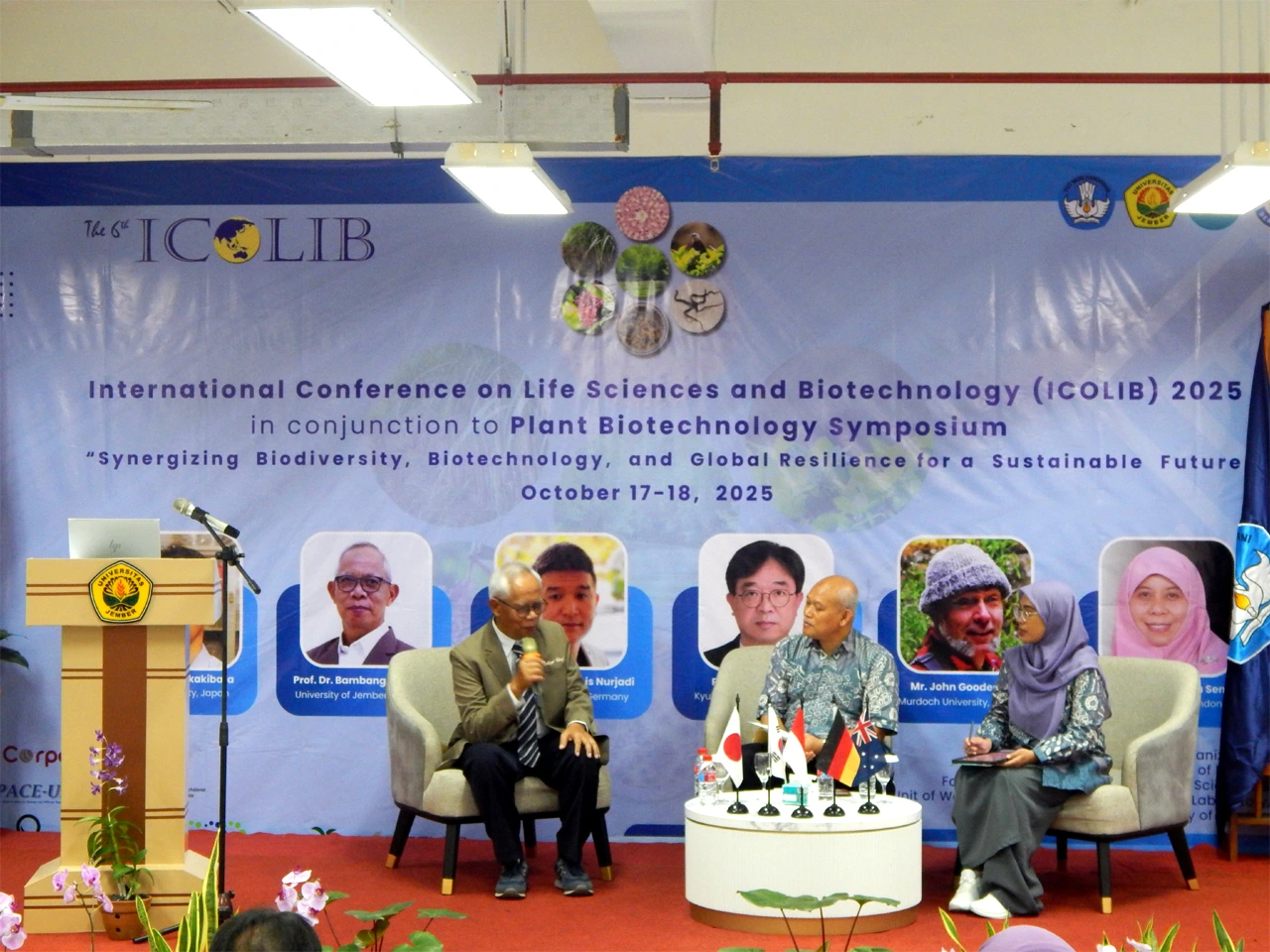
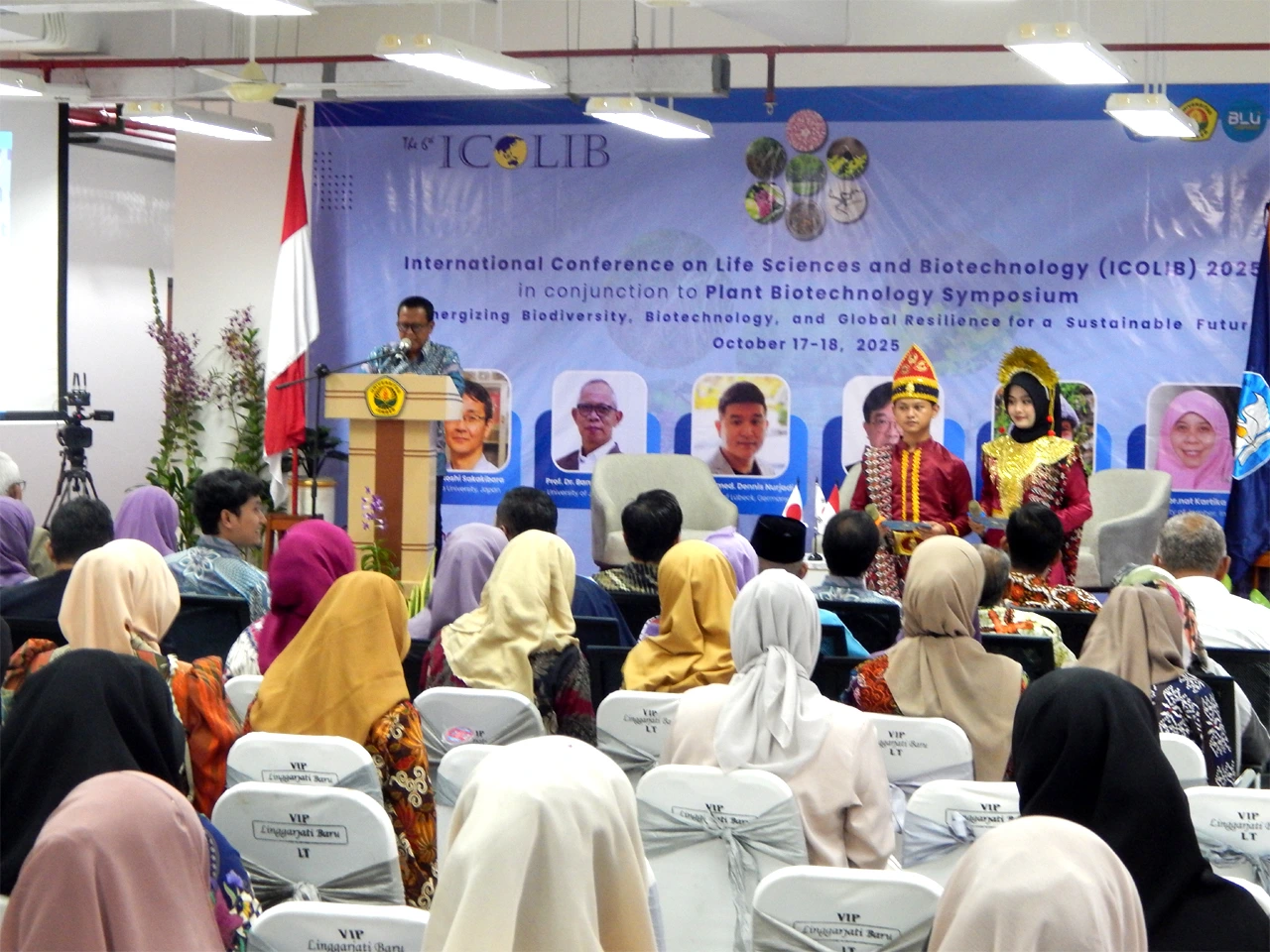
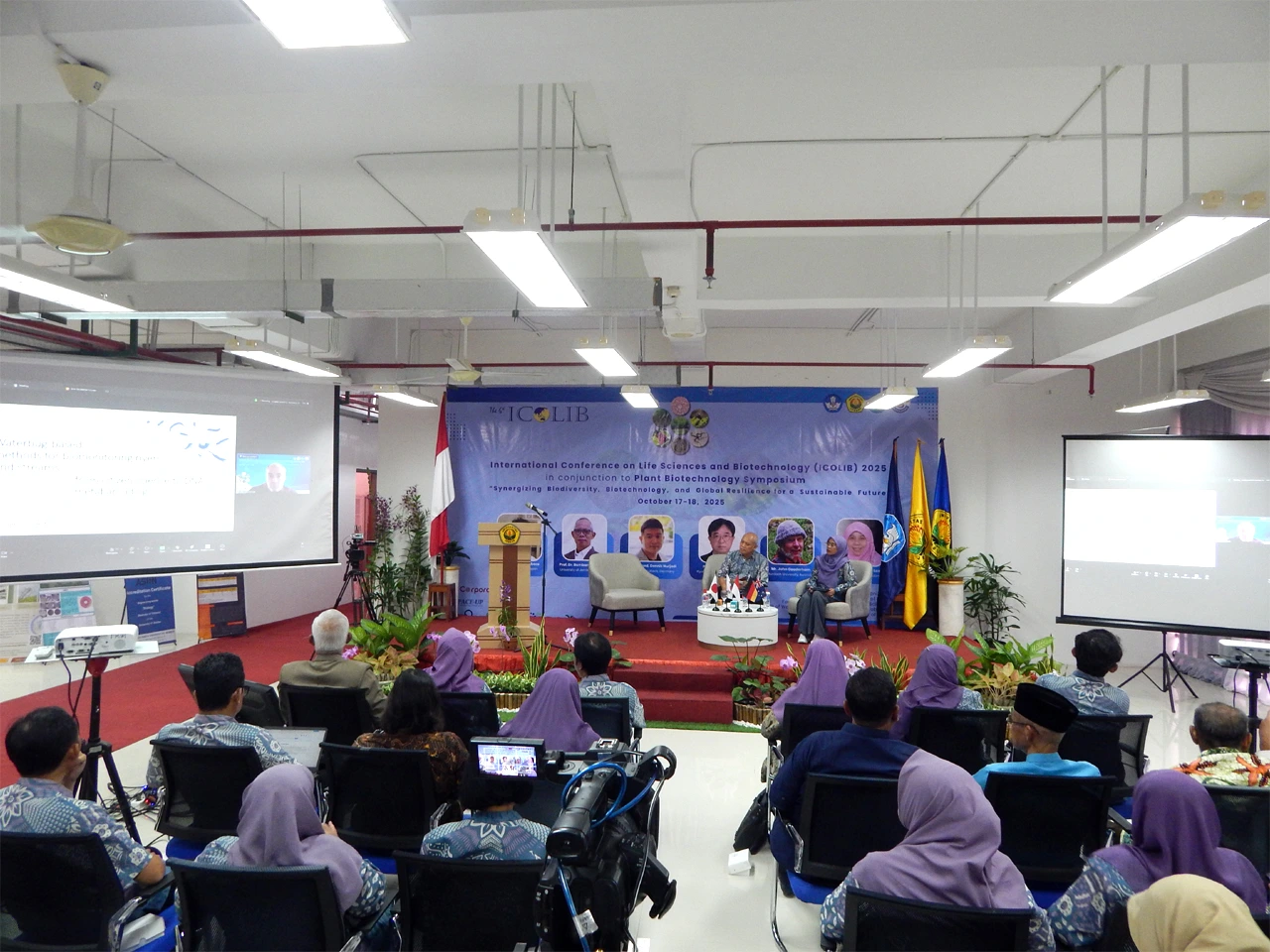
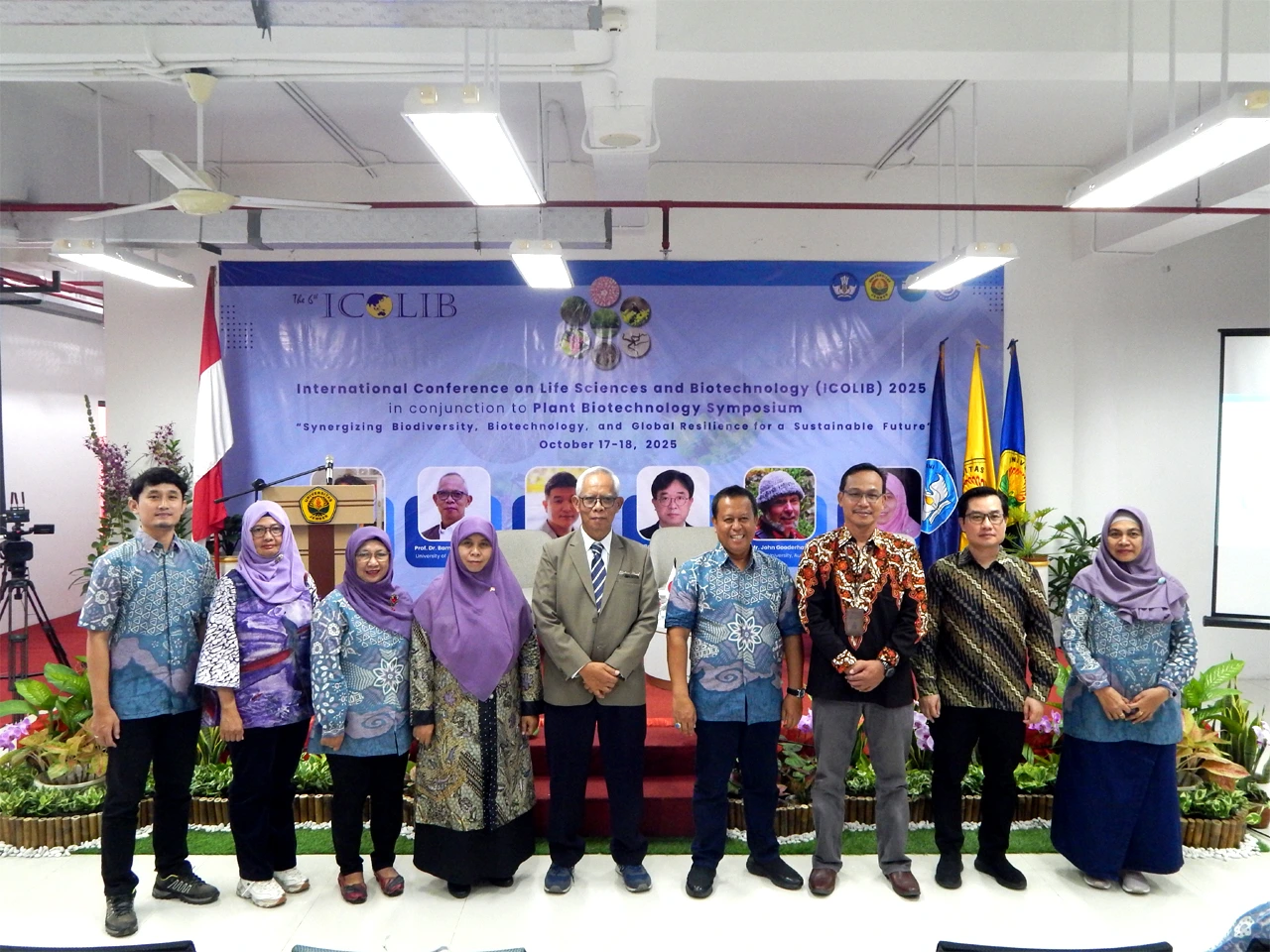
 The Biology Department of the Faculty of Mathematics and Natural Sciences, University of Jember held the 6th International Conference on Life Sciences and Biotechnology (ICOLIB) 2025 in a hybrid (17-18/10). ICOLIB is an international seminar scheduled every two years. The first ICOLIB was held in 2015, and 2025 is the sixth event. Taking the theme “Synergizing Biodiversity, Biotechnology, and Global Resilience for a Sustainable Future“. Held in the Natural Science and Food Technology (NSF) Hall, 4th floor of the IsDB Building, ICOLIB 2025 is also aligned with the Plant Biotechnology Symposium agenda by the UPA Waste Management and Integrated Laboratory of UNEJ.
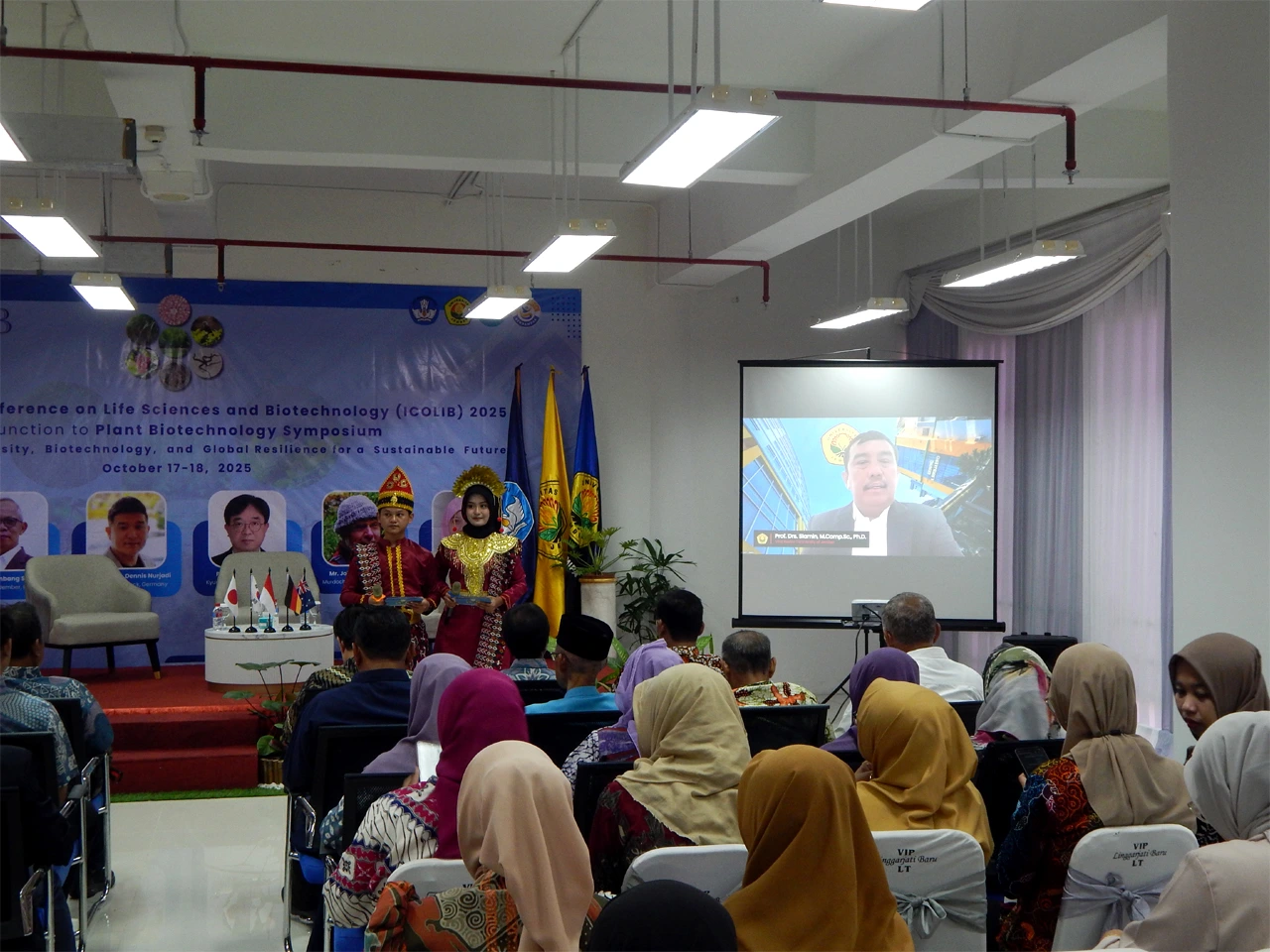
The 6th ICOLIB 2025 was officially opened by Prof. Drs. Slamin, M.Comp.Sc., Ph.D., Vice Rector of the University of Jember for Academic Affairs by online. The Vice Rector I of UNEJ stated that the theme raised at ICOLIB 2025 is very relevant to the vision of the University of Jember, especially in supporting sustainable industrial agriculture. “The University of Jember is committed to becoming a living laboratory in the fields of agricultural science, tropical biology, and bio-based materials, and upholds the combination of global research and local wisdom,” he said. ICOLIB is not only a presentation event, but a space for collaboration, exchange of ideas, and the formation of international partnerships across disciplines. Prof. Slamin invited participants to actively discuss and build connections.
Dean of FMIPA UNEJ Drs. Dafik, M.Sc., Ph.D. in his remarks said the theme is important because biodiversity is considered the operating system of life, and biotechnology is an innovative tool for food security, a clean environment, and a circular economy. “ICOLIB aims to explore three pillars: biodiversity as infrastructure, biotechnology as a supporter, and global resilience as an outcome,” he said. Prof. Dafik said Jember was chosen because it is rich in biodiversity and agriculture, supported by university facilities and collaboration with local communities, ministries, and international partners. At the end of his remarks, the Dean of FMIPA appreciated the committee for making the event a success, and invited participants to have active discussions, respect each other, and produce real solutions.
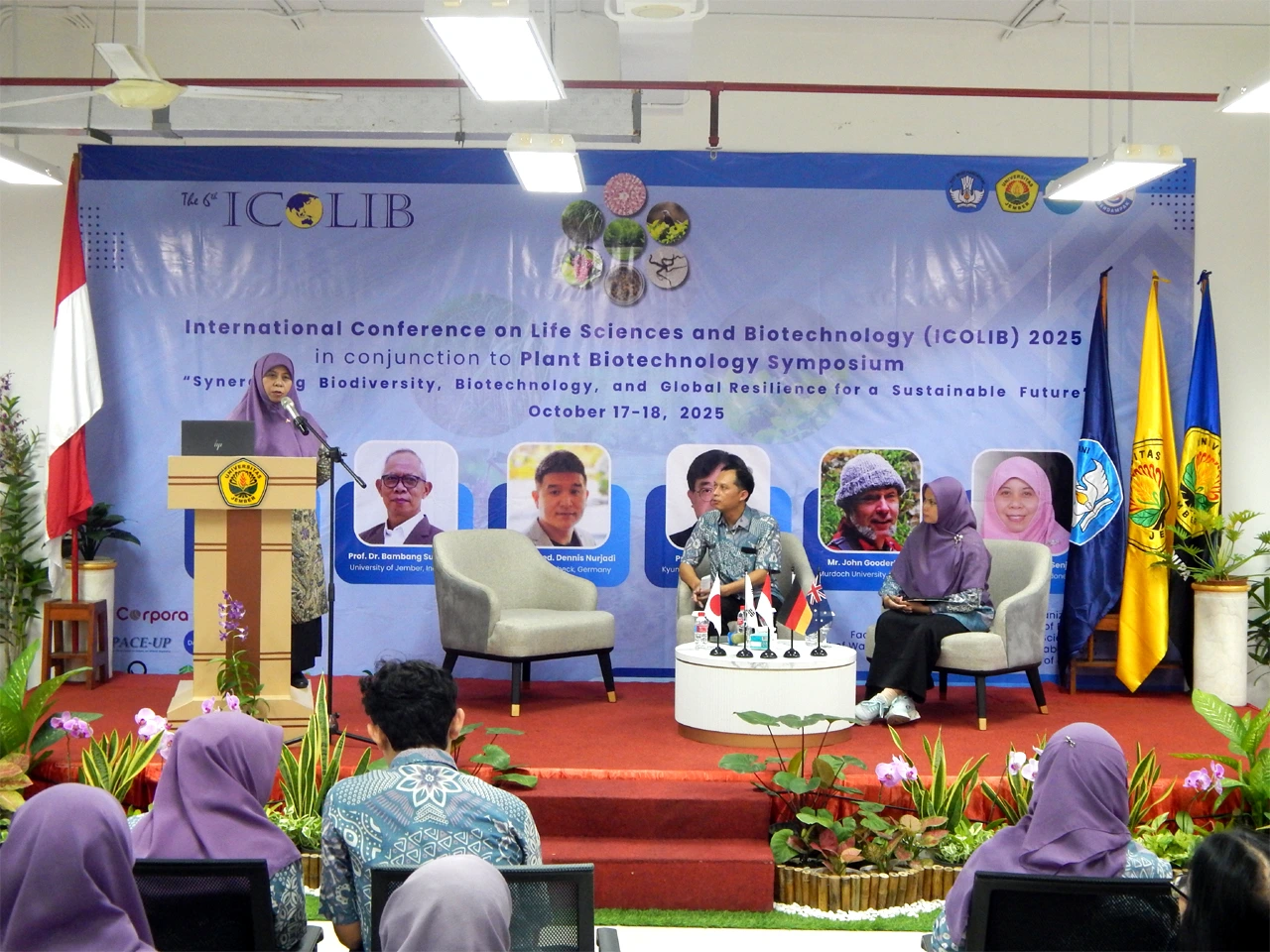
In his report, the Chairperson of the 6th ICOLIB 2025 Committee, Arif Mohammad Siddiq, S.Si., M.Si., expressed his gratitude to the leadership of the University of Jember and the keynote speakers from various countries such as Indonesia, Japan, South Korea, Australia, Germany, and Belgium. The theme of the 6th ICOLIB 2025 reflects the commitment to linking biotechnology innovation with biodiversity conservation in facing global challenges. “The 6th ICOLIB 2025 was attended by 197 participants from various institutions and countries, with 167 as oral presenters, and became an international forum for collaboration, exchange of ideas, and strengthening the scientific community for the advancement of science that benefits humans and the environment,” he reported. Arif expressed his appreciation for the hard work of the committee, supporting institutions, and sponsors. And the hope that the 6th ICOLIB 2025 will be an inspiring and productive platform towards a sustainable future.
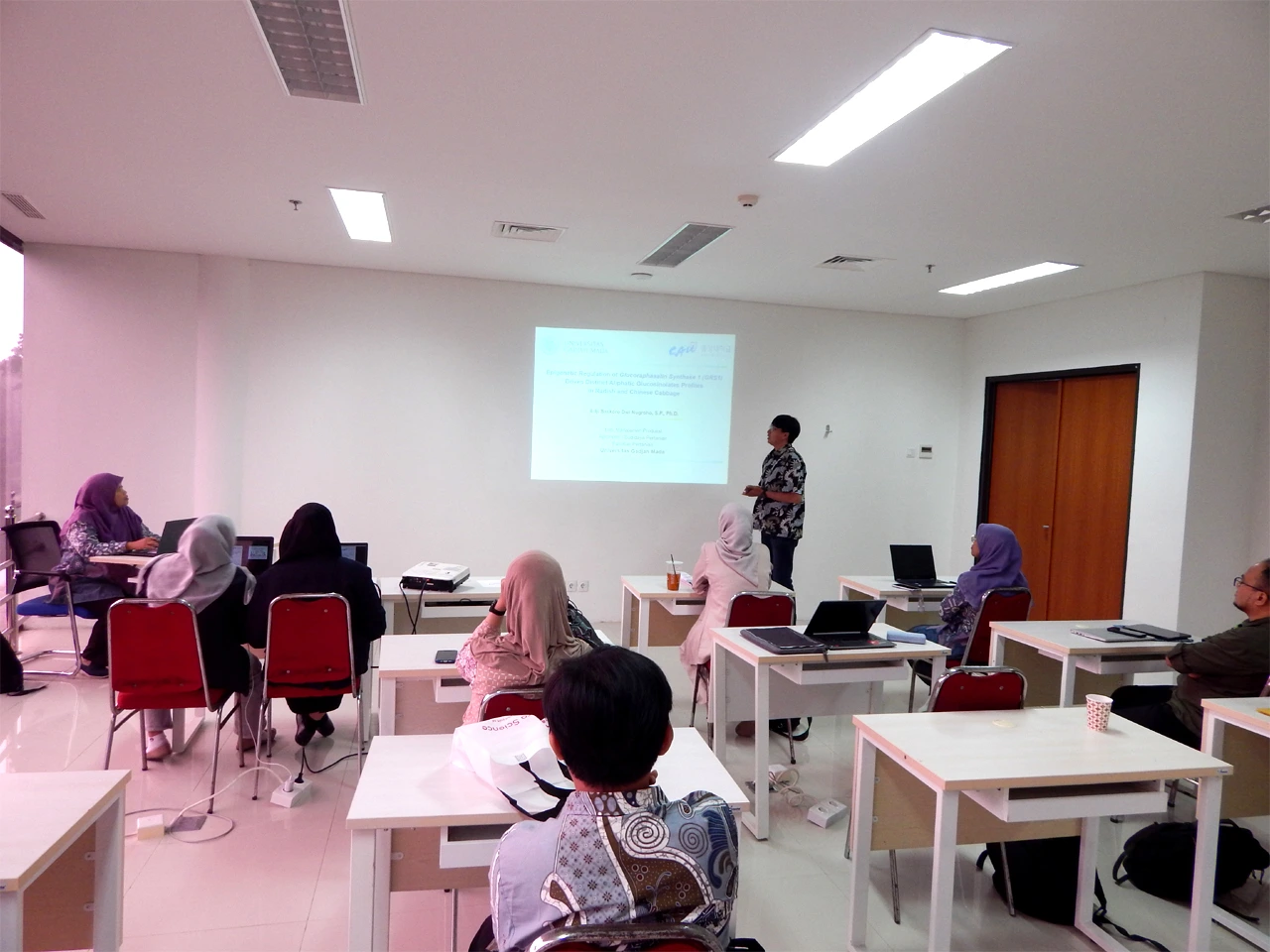
The keynote speaker who delivered the material on the first day was Prof. Dr. Bambang Sugiharto, M.Sc.Agr. with the material Transgenic Sugarcane Resistant to Sugarcane Mosaic Virus Based on Coat Protein Gene by Pathogen-Derived Resistance and RNA Interference from the Department of Biology, FMIPA UNEJ offline moderated by Dr. Asmoro Lelono, M.Sc. and the notary Dwi Indahning Rohmah, M.Sc. Continued online by Mr. John Gooderham from The Waterbug Company Pty Ltd, Tasmania, Australia and Murdoch University, Australia with the material Waterbug-Based Methods for Biomonitoring Rivers and Streams: from Citizen Science to DNA Metabarcoding. Continued with parallel session 1 which is divided into 11 rooms according to the topic namely Basic Science, Applied Science, Biodiversity & Bio-conservation and Health & Medicine.
After the break and sponsor session, the keynote speaker was Prof. Dr. rer.nat Kartika Senjarini, M.Sc. from the Department of Biology, FMIPA UNEJ with the material Vector Biology Insights for Innovative Control of Mosquito-Borne Diseases offline moderated by Dr. rer.nat. Fuad Bahrul Ulum, S.Si., M.Sc. and notary Husnatun Nihayah, S.Si., M.Biomed. Continued online by Prof. Dr.med. Dennis Nurjadi from the Center for Infectious and Inflammatory Diseases (ZIEL), University of Lubeck, Germany with the material Leveraging Whole-Genome Sequencing to Track the Evolution and Spread of AMR in Clinical Settings. Continued with the second parallel session which is divided into 12 rooms according to the topic, namely Basic Science, Applied Science, Biodiversity & Bio-conservation and Health & Medicine.
 |
 |
 |
 |
 |
 |